
How Much Should Freelancers Save for Taxes? (A Simple and Effective Guide)
Freelancer Save for Taxes
Whether you’re new to freelancing or have been self-employed for years, one question always arises: How much of each payment should be hidden to avoid taxes?
Unlike typical workers, we withhold taxes from your freelancing paychecks.
The IRS expects that you pay as you earn. If you enter the wrong number, you may risk fines, a heavy April bill, or a cash flow catastrophe.
What is the good news? It doesn’t need to be complex. Most freelancers may use a basic, dependable rule of thumb and make minor modifications based on their income, location, and costs.
For more freelancer tax guides, calculators, and IRS-focused planning resources, visit the Tax Lab hub.
In this guide, we’ll cover:
- Why freelancers pay a different tax rate than employees
- The simple percentage freelancers can start saving today
- What factors raise or lower your personal tax savings rate
- How to manage quarterly tax payments without headaches
- Common freelancer tax mistakes to avoid
Why Freelancers Need to Save More Than Employees
The biggest surprise for most new freelancers is the self-employment tax.
When you work at a normal job, your employer pays half of your Social Security and Medicare taxes (7.65%) and deducts the other half from your compensation. As a freelancer, you are both the employer and the employee. That implies you must pay the entire 15.3% yourself.
In addition, you must pay federal income tax (based on total taxable income) and, in many cases, state income tax.
So, a freelancer earning $60,000 will nearly always owe more total tax than an employee receiving the same wage, because the employee’s employer has already paid the other half of the payroll taxes.
Key takeaway: Never use an employee’s tax withholding rate (10-15%) as a guideline. Freelancers should save more.

The Simple Answer: Save 25–30% of Your Net Income
After decades of freelancers sharing their experiences, the consensus is clear: save 25% to 30% of your net company revenue (profit after costs).
• If you live in a state with no income tax, make a moderate income (under $60,000), and claim most of your lawful deductions, the 25% rate applies.
• If you reside in a high-tax state (e.g., California, New York, Hawaii, Oregon, Minnesota), make more than $80,000, or prefer a larger buffer, 30% is a safer option.
Net income is your freelancing earnings minus all company expenditures (software, equipment, home office, travel, etc.). You do not have to pay taxes on the money you spend running your firm.
If you’re just getting started and haven’t perfected your spending tracking, set aside 30% of each payment in a separate account.
Factors That Change Your Personal Freelance Tax Savings Rate
Your exact percentage depends on these four main factors.
1. Your Total Net Income (Profit)
Higher profits push you into higher federal tax brackets. The table below gives you a safe savings range without complex calculations.
Annual Net Freelance Income Suggested Savings Rate (Federal + SE + State)
| Income | Saving Rate |
| Up to $20,000 | 15–20% |
| 20,000–50,000 | 20–25% |
| 50,000–100,000 | 25–30% |
| 100,000–200,000 | 30–35% |
| Over $200,000 | 35–40% (plus additional Medicare tax) |
2. Your State Income Tax
Some states take a big bite; others take nothing.
• No state income tax (0%): Texas, Florida, Nevada, Washington, South Dakota, Wyoming, Tennessee, Alaska, New Hampshire (only interest/dividends). Your savings rate can stay near 25%.
• Moderate state tax (4–6%): Illinois, Colorado, Michigan, Utah, Pennsylvania. Add roughly 5% → save 30% or more.
• High state tax (7–13%): California, Hawaii, Oregon, New York, New Jersey, Minnesota, Vermont. Add 7–10% → save 32–35% or even higher.
3. Your Business Deductions
Every dollar you legally deduct lowers your net income and your tax bill. Common deductions of freelancers include:
• Home office (simplified method: $5 per square foot, up to 300 sq ft)
• Internet and phone bills (business percentage)
• Software subscriptions (Adobe, Canva, QuickBooks)
• Equipment (laptops, cameras, tools – up to $2,500 section 179 expensing)
• Health insurance premiums (deducted on your personal return)
• Retirement contributions (SEP IRA, Solo 401k – can reduce taxable income by 10,000–10,000–50,000)
The more you deduct, the less you need to save. But don’t invent deductions. Keep receipts.
4. Filing Status and Household Income
Are you single? Married filing jointly? Does your spouse have a W-2 job with tax withholding?
• Married couples often have a larger standard deduction (29,200in2024vs.29,200in2024vs.14,600 for single). That lowers your taxable income.
• If your spouse overwithholds at their job, you may need to save less for your freelance taxes.
Simple rule: If you’re unsure, save 30% of your freelance net income. You can always adjust after your first full year.
How to Set Up a Painless Tax Savings System
Forget complex spreadsheets. Do this instead.
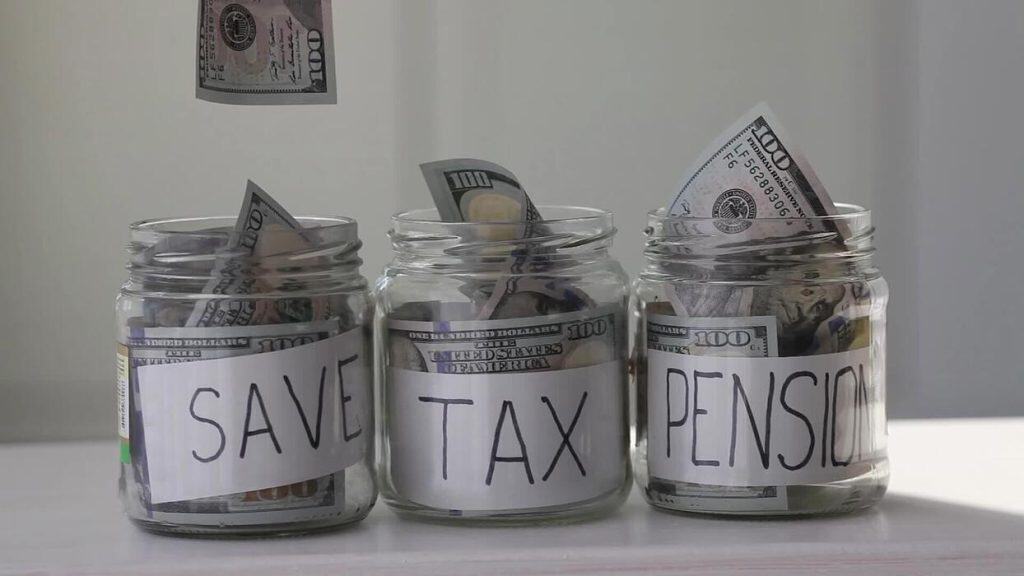
Step 1 – Open a Separate “Tax Only” Bank Account
A high-yield savings account works best. Name it “Freelance Taxes – Do Not Touch.” Never use it for anything except paying the IRS and your state.
Step 2 – Automate the Transfer
Set up an automatic transfer every time you get paid. For example:
• If you use invoicing software (FreshBooks, Wave, QuickBooks), create a rule: “When a payment arrives, send 25% to Tax Account.”
• If you get paid via PayPal or direct deposit, manually move the percentage immediately. Treat it like a bill.
Step 3 – Pay Quarterly, Not Annually
The IRS expects you to pay estimated taxes four times per year. Here are the typical due dates.
From your tax savings account, send a payment to the IRS (Form 1040 ES) and your state tax department each quarter.
Step 4 – Reconcile Once a Year
After you file your annual tax return (or have your CPA do it), look at your total tax bill divided by your net income. That’s your real freelance tax savings rate for that year. Adjust next year’s automatic transfer percentage accordingly.
For a quick estimate, use our Quarterly Tax Calculator. You can also explore the Tax Lab hub for more guides on 1099 taxes, quarterly payments, and freelancer tax planning.
What to Do If Your Income Varies Widely
Freelancer income is rarely consistent. Some months you get 10,000, while others earn 500.
The solution is to save based on payments rather than months.
Every time you receive a deposit, immediately transfer your desired proportion (for example, 25%) to the tax account. If you earn less in a particular quarter, you will pay less in anticipated taxes.
The IRS only compels you to pay based on your actual earnings throughout the quarter.
Safe harbour from penalties: Even if your income increases, you will not be penalised if you pay (a) 100% of last year’s total tax (110% if you earn more than $150,000), or
(b) 90% of this year’s tax. This is why persistent savings are more important than accurate predictions.
Five Common Freelancer Tax Mistakes (And How to Avoid Them)
| Mistake | Why It Hurts | Fix |
| Saving only 15% | You’ll owe thousands in April plus penalties | Save at least 25% |
| Not paying quarterly | IRS adds 0.5% penalty per month on underpayments | Use the due dates |
| Mixing business and personal money | Hard to know true net income; missed deductions | Separate bank accounts |
| Forgetting state taxes | Surprise state bill (can be large in NY/CA | Check your state’s website |
| Spending the tax money | you can’t pay the IRS | Never borrow from your tax account |
How to Lower Your Tax Bill Legally
You do not have to just accept a high tax rate. Here are three effective methods for lowering your taxable profit and so lowering the amount you need to save.
Maximise retirement contributions
A SEP IRA allows you to contribute up to 20% of your net income (or around 25% if you’re a sole owner). For 2024, the maximum is $69,000. Each dollar you give reduces your taxable income.
Example (without math): A freelancer who contributes $10,000 to a SEP IRA may minimise their tax burden by many thousands of dollars, requiring them to save far less than 30%.
Take all legitimate business deductions.
Use a basic application like QuickBooks Self-Employed or Wave to keep track of your costs all year.
Common deductions that freelancers overlook:
• Establish a home office, even if it’s only a closet.
• In 2024, mileage for customer meetings or supply trips will cost 67 cents per mile.
• 50% of meals with clients or when travelling for work. • Education and training courses.
• Bank and payment processing costs (e.g., Stripe and PayPal).
Consider an S Corporation (for higher earners).
If your net income consistently surpasses $60,000, speak with a CPA about incorporating an S Corp. You can pay yourself a “reasonable salary” (payroll taxes apply) and distribute the leftover profits (no self-employment tax). This can greatly minimise your overall tax burden. This is not a do-it-yourself project; hire a professional.
What If You Can’t Pay Your Tax Bill?
Sometimes life intervenes—a slow quarter, an emergency, or you misjudged your tax-saving rate.
Don’t disregard the IRS. The consequences for failure to file are far more severe than those for failure to pay.
Your options:
1. Submit your return on time, even if you cannot pay. The failure to file penalty is 5% each month, compared to 0.5% for failure to pay.
2. Use your return to pay the largest amount possible.
3. Apply for an instalment agreement online (if you owe less than $50,000). You will pay interest plus a minor startup charge.
4. Consider making a compromise offer if you are unable to pay the whole amount.
This is rarely accepted. Better still, eliminate the problem by saving your goal percentage from day one.
Conclusion
How much money should independent contractors set aside for taxes? The straightforward answer is 25-30% of your net freelancing earnings. Your specific freelance tax savings rate will vary depending on where you reside, how much you earn, and how many deductions you claim; nonetheless, this range protects practically all freelancers from fines and surprises.
Here’s the three-step action plan:
1. Set up a separate high-return savings account for taxes.
2. Transfer 25-30% of customer payments to the account immediately.
3. Use savings to pay quarterly estimated taxes.
Stop guessing and fretting. Set up the system once, automate it, and then concentrate on producing excellent results for your clients. Tax season will be simply another usual activity, not a horror.
Next step: visit the Tax Lab to continue learning about freelance taxes, or use the Freelance Tax Calculator to estimate your tax savings target.
FAQ
Should I save based on gross income or net income?
Save based on net income (after business expenses). You don’t pay taxes on money you spend on business supplies, software, or travel. However, if you don’t track expenses well, saving 30% of gross income is safer.
Can I just save the money and pay once a year?
Yes, but the IRS may charge an underpayment penalty. The penalty is modest (roughly 5–8% of the underpaid amount per year), but it’s still money you could keep. Paying quarterly is easy and avoids the penalty.
What’s the best bank account for tax savings?
Any high-yield savings account (Ally, Marcus, Capital One 360, SoFi) works well. Keep it separate from your everyday checking. Some freelancers use a checking account to make quarterly payments simpler.
How do I actually pay the IRS quarterly?
Use IRS Direct Pay (free, from your bank account) or the Electronic Federal Tax Payment System (EFTPS). You’ll need to fill out a simple Form 1040 ES voucher or use the online system. Your state will have its own payment portal.
Does saving 30% include both federal and state?
Yes. When we say “save 25–30%”, that total should cover your self-employment tax, federal income tax, and state income tax. In a high tax state, lean toward 30–35%.